

Downtime creates liabilities for data centers. Because continuous operations define success, the infrastructure supporting these facilities must be flawless. Packaged power solutions are a vital strategy for operators who need to ensure reliability while managing rapid growth. This guide details what these solutions entail and highlights the providers best equipped to support such critical operations.
What Are Packaged Power Solutions?
Packaged power solutions are prefabricated, modular systems designed to streamline the delivery of electrical infrastructure. Unlike traditional stick-built methods, where components are assembled individually on-site, these solutions arrive already integrated and tested. They typically hold essential elements, such as switchgear, uninterruptible power supplies (UPS), transformers and cooling controls in a secure enclosure.
Packaged power exists to provide a scalable and quickly deployable power backbone, allowing data center operators to bypass the long lead time associated with conventional construction. They also ensure that the infrastructure can grow in lockstep with server capacity.
Their key benefits include:
- Deployment speed: Manufacturers build these units concurrently with site preparation, which reduces the overall project timeline.
- Scalability: Facilities can add power modules incrementally, preventing overprovisioning and allowing capital expenditure to match actual demand.
- Reliability: Technicians assemble and test these systems in controlled factory settings, resulting in higher consistency and fewer failures than field-assembled units.
- Smaller footprint: Engineers design these enclosures to be compact, preserving valuable square footage for revenue-generating IT equipment.
Methodology for Selecting the Top Providers
The following list is based on critical criteria for modern data center operations. The providers were evaluated on their ability to engineer custom-fit solutions rather than offering only one-size-fits-all products. They were also assessed on inventory depth, as supply chain fluidity can impact deployment speed, as well as their range of services, including sales, rental options and maintenance support.
10 Best Packaged Power Solution Providers
The following companies demonstrated a proven track record of supporting high-stakes data center environments.
1. Sunbelt Solomon
Sunbelt Solomon is a premier provider of comprehensive electrical power solutions, distinguishing itself through the unique ability to engineer custom approaches for the complex and specific requirements of modern data centers. While many competitors focus solely on new equipment, it leverages a massive inventory of both new and remanufactured offerings.

This vast stock allows it to bypass common supply chain bottlenecks and deliver equipment fast. The approach is valuable for data centers that need to scale up capacity immediately without waiting months for factory lead times. Its service model is also highly flexible, spanning the entire life cycle of electrical equipment. It offers sales, rentals, repairs and field services, as well as specializing in tailoring transformers and switchgear to fit precise voltage and footprint needs.
Sunbelt Solomon manages the full spectrum of power requirements. Its commitment to sustainability through remanufacturing also gives companies a strategic advantage as they reduce their carbon footprint while maintaining industrial-grade reliability.
2. Aggreko
Aggreko is a global leader known for its expertise in temporary power, cooling and energy services. It has carved out a niche in the data center sector by focusing on power solutions, a service essential for facilities that are mechanically complete but awaiting a permanent utility connection.

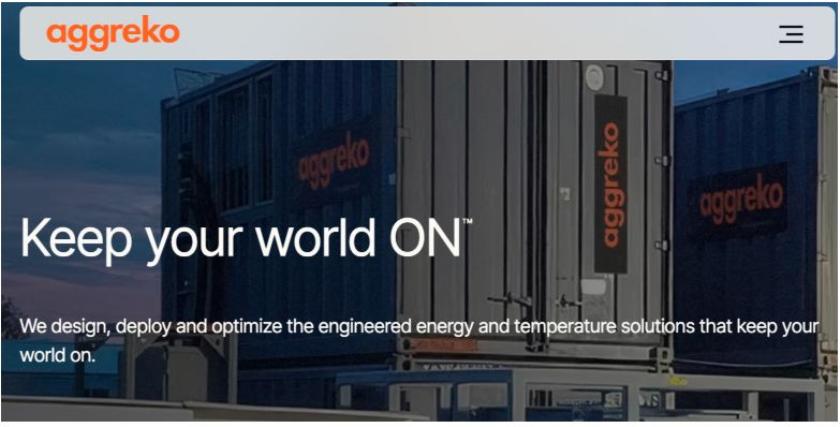
Aggreko allows these sites to begin commissioning servers and running tests well before the grid comes online. This capability accelerates time-to-market for data center operators. Its model operates mainly on a power-as-a-service basis, with a rental-focused approach that lets users treat power infrastructure as an operating expense rather than a massive up-front capital investment. This means users can scale up or down as needed.
The company also excels in rapid deployment, often mobilizing large-scale modular power and cooling setups in days. Its global footprint enables it to support projects in major hubs and remote areas with equal efficiency.
3. USP&E
USP&E operates as a full-service provider of power station solutions, specializing in engineering, procurement and construction (EPC). Its strength lies in its ability to manage complex projects from the initial design phase to full operation. It is particularly adept at serving data centers located in challenging or emerging markets. It designs robust power stations that function independently or in hybrid setups to ensure continuous uptime.

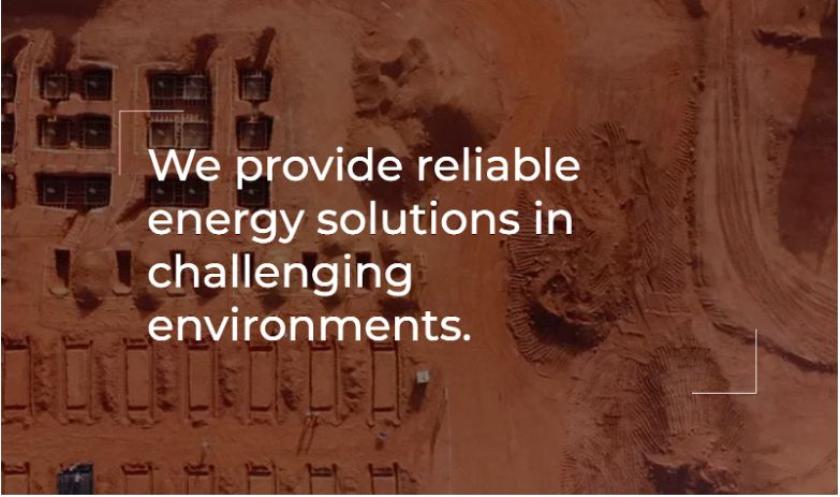
USP&E also acts as a strategic partner that handles the logistics, installation and ongoing management of a power plant. This end-to-end management relieves the data center operator of the burden of becoming a power generation expert. In addition, it incorporates fuel-efficient technologies into station designs. This efficiency focus drives the long-term cost of energy down.
4. Vertiv
Vertiv offers a comprehensive ecosystem of power and thermal management solutions designed for high-density computing environments. Its product line includes UPS, power distribution units (PDUs), and integrated modular solutions that house power and cooling. It focuses heavily on efficiency and density, so equipment handles the massive heat and power loads of modern artificial intelligence and cloud computing workloads.

A key benefit of working with Vertiv is its dedication to architectural innovation. Its prefabricated modular data centers are built for rapid expansion, with units arriving prewired and preintegrated, reducing on-site construction risks. It also provides advanced monitoring software so operators gain deep visibility into their power usage effectiveness. This allows facility managers to optimize performance and prevent outages.
5. Schneider Electric
Schneider Electric‘s EcoStruxure platform offers a holistic suite of solutions that integrates power, cooling and IT management. It is renowned for its prefabricated power modules for data centers, which are skid-mounted or containerized systems that simplify the construction of power rooms. It standardizes the design, resulting in predictable performance and easier maintenance across multiple sites.
The benefits of working with Schneider Electric’s solutions include high levels of integration and Internet of Things connectivity. Its equipment is designed to communicate and provide real-time data on asset health and energy consumption. Such connectivity supports predictive maintenance strategies to reduce the likelihood of unexpected component failure.
6. Mesa Power Solutions
Mesa Power Solutions specializes in the design and manufacture of custom energy systems, with a particular focus on generator packaging and switchgear. Unlike volume manufacturers that push standard catalog items, Mesa Power provides bespoke solutions. It builds networks that fit specific spatial and technical requirements, which are vital for retrofitting existing facilities or maximizing space in new builds.

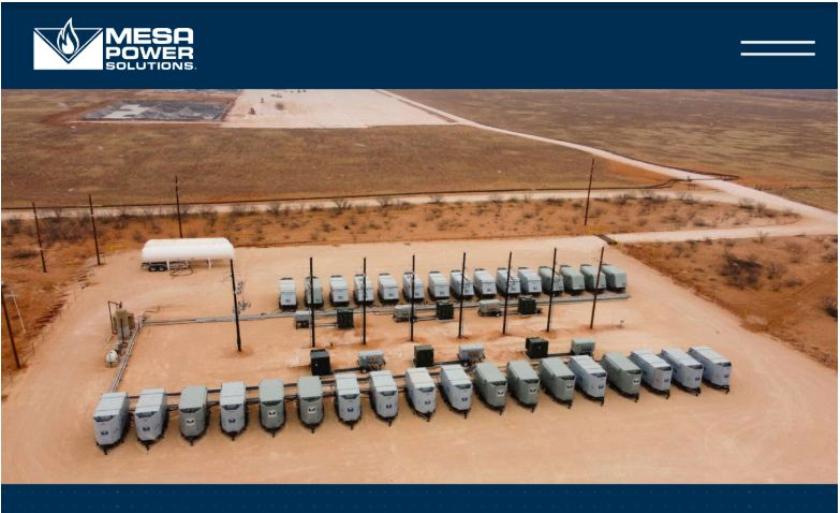
It is best known for its rigorous focus on manufacturing quality and collaboration, involving clients throughout the engineering process to ensure the final product aligns perfectly with expectations. The company also produces industrial-grade packaging that protects sensitive generation equipment from environmental elements, ensuring that backup systems remain operational even during extreme weather events.
7. Eaton
Eaton is a leader in UPS systems, energy distribution and power quality software. The company approaches power as a strategic asset — its EnergyAware UPS technology is a standout feature that allows data centers to use their backup batteries to support the grid during peak demand. This transforms a cost center into a potential revenue stream or cost-saving mechanism.

Eaton emphasizes total cost of ownership (TCO). Its systems are engineered for high efficiency to reduce energy losses during conversion. Over the life of a data center, even a fractional percentage improvement in UPS efficiency translates to significant financial savings. It also provides management software that can simplify the process of monitoring distributed power assets across a global portfolio.
8. Gennex Energy
Gennex Energy provides integrated power solutions with a strong emphasis on renewable and hybrid energy systems. As data centers face growing pressure to decarbonize, it offers a path to sustainability without compromising reliability. It specializes in combining solar arrays, inverters and enterprise-level battery storage into a cohesive system, enabling facilities to generate and store their own clean energy.

The primary benefit of Gennex is its expertise in alternative energy integration, enabling commercial clients to reduce reliance on the utility grid and mitigate exposure to fluctuating rates. Data centers looking to achieve green certifications will be pleased to know that it provides the necessary hardware and engineering support. Its storage solutions also act as a buffer, providing immediate power continuity while backup generators spin up.
9. Generac
Generac is widely known for its reliability in the residential and industrial industries. It provides industrial-scale natural gas and diesel generators for data centers and similar clients. These units are the backbone of redundancy strategies. The company designs its industrial line to meet the rigorous startup and load acceptance standards required by critical IT demands.

Generac generators offer integrated paralleling systems that enable multiple machines to work at the same time. This capability is essential for achieving N+1 or 2N redundancy, ensuring that if one generator fails, others can instantly take the load. The company also offers an extensive service network for parts and maintenance, so help is readily available for critical assets at any time.
10. Hitachi Vantara
Hitachi Vantara approaches power from a digital and holistic perspective, utilizing advanced analytics and software to optimize the entire data center ecosystem. This includes managing power consumption and cooling efficiency as part of a broader digital transformation scheme.

The company focuses on optimization through intelligence, analyzing data patterns to predict power spikes and cooling needs. This allows operators to run facilities leaner and more efficiently. By treating power, cooling and IT workload as an interconnected system, Hitachi Vantara helps data centers achieve a level of operational efficiency that hardware alone cannot deliver.
Comparing the Top Power Solution Providers
This table provides an at-a-glance look at the featured companies and their offerings.
| Company | Key Offering | Best For | Service Model |
| Sunbelt Solomon | Custom-engineered power equipment and services | Tailored builds and rapid deployment | Sales, rental, hybrid |
| Aggreko | Temporary power and cooling rentals | Scalable bridging power | Rental and as-a-service |
| USP&E | Full EPC for power stations | End-to-end new builds | Project-based |
| Vertiv | UPS systems, modular infrastructure | High-efficiency solutions | Sales and service |
| Schneider Electric | Integrated power and IT infrastructure | Prefabrication solutions | Sales and service |
| Mesa Power | Custom-built generator and switchgear | Bespoke manufacturing | Sales |
| Eaton | Power quality and UPS systems | Energy-efficient TCO | Sales and service |
| Gennex | Hybrid and renewable power systems | Sustainable solutions | Sales and integration |
| Generac | Industrial generators | Standby backup power | Sales |
| Hitachi Vantara | Holistic data center optimization | Software-defined power | Solutions and services |
How to Choose the Right Provider
Working with the right packaged power solutions partner will protect your uptime and bottom line.
Assess Your Technical Needs
Start with a granular analysis of your power density and redundancy goals. A facility seeking a Tier IV classification with 2N redundancy has vastly different needs than a smaller edge data center.
Find out if off-the-shelf equipment can meet your voltage and load requirements or if you require custom engineering. Future-proofing is also important because the system you install today must accommodate the higher rack densities expected tomorrow.
Evaluate Vendor Expertise
Look for providers that offer comprehensive service level agreements and have a proven history of field support. A vendor who just drops off a generator is not a partner, and the hardware is only as good as the team using it. You need a team that understands the demands of commissioning, load banking and preventive maintenance.
Investigate their engineering depth, as well. Their ability to solve problems on the fly is often more valuable than the equipment itself.
Consider the Speed of Delivery
Time is currency — supply chain disruptions can delay standard equipment orders by months, leaving your facility idle. Providers with vast inventories or modular, prefabricated designs offer a competitive advantage.
Companies that stock remanufactured units or offer rental bridges can get you powered up while waiting for permanent installations. When evaluating a proposal, weigh the value of getting to market months earlier against the equipment’s line-item cost.
Review the Total Cost of Ownership
It’s easy to focus on the initial price, but the real cost of power infrastructure is the one that unfolds over the years. Inefficient UPS systems waste electricity every minute they operate and inflate your electricity bills.
Calculate the long-term operational expenses alongside the capital expenditure. Consider the cost of maintenance contracts, fuel efficiency and the potential effect of downtime. A system with a slightly higher price offering superior reliability will prove cheaper over a 10-year horizon.
Future Trends in Packaged Power
The data center sector is evolving rapidly, driven by the intense demands of artificial intelligence and high-performance computing. Three key trends are shaping how these are designed and deployed.
First, liquid cooling integration is becoming nonnegotiable. As AI chip densities rise, traditional air cooling is insufficient. Research notes that the liquid cooling market is expected to grow by 22.8% through 2031, necessitating power modules that can support pumps and coolant distribution units with standard electrical loads.
Second, there is a growing shift toward direct current (DC) power. By eliminating the multiple AC-to-DC conversion steps typical in legacy data centers, operators may see a significant reduction in energy waste.
Finally, AI-driven management is enabling real-time predictive maintenance, allowing systems to self-diagnose power fluctuations before they cause outages. Studies show that such intervention can reduce downtime by 26% and lower maintenance costs by 22%.
Powering Your Data Center’s Future
The right packaged power solution provider will secure your facility’s performance. The ideal partner brings a combination of engineering precision, supply chain strength and service flexibility. Who you partner with today determines how well your infrastructure can handle the growth that lies ahead.