


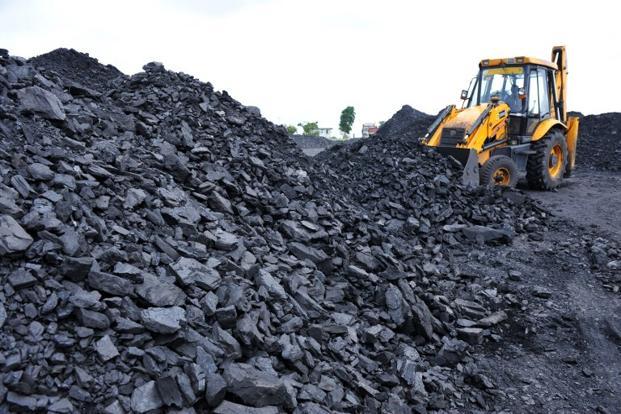
Global coal consumption is heading for another record in 2026 as energy-security concerns, higher natural gas prices, rising electricity requirements and weather-related disruptions outweigh the impact of rapidly expanding renewable energy capacity.
The International Energy Agency (IEA), in its Coal Mid-Year Update 2026, expects global coal demand to increase 1.2 percent to 8.94 billion tonnes (Bt) in 2026, reversing its earlier expectation of a decline. The new forecast follows record consumption of 8.84 Bt in 2025, when demand increased 0.3 percent.
The numbers indicate that investment in renewable generation has not yet translated into a sustained global decline in coal consumption. China remains the biggest influence on the market, while India and Southeast Asia are emerging as the principal growth centres.
Coal use reaches another global record
Power generation remains by far the biggest use of coal. The electricity sector accounts for around two-thirds of global coal consumption, making coal demand particularly sensitive to changes in electricity consumption, natural gas prices, renewable generation and weather.
In 2025, coal used for power generation amounted to 5.954 Bt, while metallurgical coal demand stood at 1.174 Bt.
The 2026 increase is being supported by an unusual combination of factors. Higher natural gas prices associated with the Middle East crisis have made coal more competitive in power generation in several countries. At the same time, strong El Niño conditions are increasing cooling demand and potentially reducing hydropower availability.
The result is a striking reversal. For the first time in around 50 years, coal-fired electricity generation declined simultaneously in China and India in 2025, yet global coal consumption still reached a record.
China consumes 5 billion tonnes of coal
China remains the centre of the global coal economy. Its coal demand is forecast to rise about 1 percent to 5 Bt in 2026, equivalent to well over half of worldwide consumption.
China accounted for more than 56 percent of global coal consumption in 2025, while its power sector alone consumed approximately one-third of the world’s coal.
The scale means relatively small movements in Chinese electricity demand, hydropower generation, wind and solar output or coal-plant utilisation can materially alter the global market.
Coal also continues to play an industrial role. Higher oil prices have improved the economics of China’s coal-to-chemicals industry, although many plants were already operating at high utilisation rates. Conversely, steel and cement production, which peaked in 2020, is expected to continue declining in 2026.
India coal demand jumps 4.2% to 1.35 billion tonnes
India is becoming an increasingly important source of incremental coal consumption.
The IEA forecasts Indian coal demand will increase 4.2 percent to 1.353 Bt in 2026, recovering from the unusual decline recorded in 2025.
Electricity demand is a major driver despite India’s rapid expansion of renewable capacity. Strong El Niño conditions could increase electricity requirements for cooling while simultaneously reducing hydropower availability.
Industrial coal consumption is also growing as India expands pig iron, direct-reduced iron and cement production. Metallurgical coal demand is expected to rise as additional steel production comes largely from the blast furnace-basic oxygen furnace route, which requires coking coal.
India therefore illustrates the central challenge facing the global energy transition: renewable capacity can grow rapidly while absolute coal consumption also increases because electricity and industrial demand are expanding.
ASEAN coal consumption reaches 574 million tonnes
Southeast Asia represents another major coal growth market.
Coal demand across ASEAN is forecast to reach around 574 million tonnes in 2026, primarily driven by power generation in Indonesia and Viet Nam.
Indonesia uses coal not only in the public electricity system but also in captive power plants serving energy-intensive industries including nickel, cement and increasingly aluminium production.
Viet Nam continues to depend heavily on coal-fired generation as electricity demand expands. Heatwaves, stock replenishment and potentially weaker hydropower generation associated with El Niño are supporting consumption.
This contrasts sharply with mature markets, where the long-term direction remains downward.
US coal demand falls 7% after 2025 rebound
US coal consumption surged more than 9.5 percent to 410 Mt in 2025, supported by stronger electricity demand, higher natural gas prices and government policies favouring coal-fired generation. Around 93 percent of US coal demand comes from power generation.
The rebound is not expected to continue. The IEA forecasts US coal demand will fall 7 percent in 2026, although consumption should remain above the 2024 level.
Growing electricity requirements, including demand from data centres, and postponed coal-plant retirements are helping keep generating units operating. However, inexpensive natural gas and renewable energy continue to pressure coal’s share of US electricity generation.
The European Union follows a similar structural trajectory. EU coal demand is forecast at 276 Mt in 2026, with renewable expansion, greater nuclear availability in some countries, coal phase-out policies and weaker industrial demand limiting consumption.
Global coal production remains above 9 billion tonnes
The production side of the market remains enormous.
Global coal output reached approximately 9.1 Bt in 2025, close to an all-time record. China alone produced 4.71 Bt, while Indian production remained around 1.1 Bt.
Production is expected to decline in 2026, although the report contains differing estimates depending on the section: its detailed production chapter projects a 0.7 percent decline, while the overview describes a decline of around 2 percent. Both point to output remaining above 9 Bt.
China is expected to produce more than 4.62 Bt in 2026. Production was disrupted after a fatal accident in Shanxi triggered safety inspections. More than 100 mines representing over 100 Mt of annual capacity were temporarily closed, and June-July production dropped around 10 percent year over year.
India, meanwhile, is expected to produce a record 1.095 Bt in 2026, supported by policies aimed at strengthening domestic supply and reducing dependence on imported coal. Coal India accounts for roughly three-quarters of national production.
Indonesia is making a supply adjustment after years of rapid expansion, while Australia is expected to produce around 452 Mt in 2026.
Coal investment shifts toward domestic energy security
The IEA report does not provide a comprehensive dollar figure for global coal investment in 2026, so assigning a worldwide investment value from this report would be misleading.
However, production and capacity trends reveal where capital and policy support are being directed. China and India have expanded domestic coal production substantially since shortages in 2021, treating local supply as an important part of energy security. China’s cumulative increase in coal production since 2020 exceeds 1 Bt.
India is simultaneously expanding captive and commercial mines and replacing imported thermal coal with domestic production. Indonesia is taking a different approach by lowering its production target amid weaker prices and changing domestic-market requirements.
The investment picture is therefore increasingly regional: China and India prioritise domestic supply security, while several mature economies continue reducing coal exposure.
Coal capacity remains important despite renewable investment
The most important capacity story in 2026 is not simply how much coal capacity is being added, but how existing capacity is being used.
Higher gas prices have encouraged greater utilisation of available coal plants in China, Korea, Japan and parts of Europe. In Korea, coal consumption is expected to rise 6 percent to 119 Mt, while coal-fired generation jumped 30 percent year over year in Q1 2026 because of low nuclear availability and higher gas prices.
Japan’s coal demand is forecast to decline only 1 percent to 161 Mt, partly because higher LNG prices have supported coal generation.
This demonstrates why installed coal capacity remains relevant even in markets adding solar, wind and nuclear power: existing plants can return to higher utilisation when competing fuels become expensive or alternative generation becomes unavailable.
What record coal use means for CO2 emissions
Coal remains the most carbon-intensive major fossil fuel, so another record year for consumption creates a significant obstacle to reducing global energy-related CO2 emissions.
However, the Coal Mid-Year Update 2026 does not provide a quantified forecast for global coal-related CO2 emissions. Its focus is coal demand, production, trade and prices. It would therefore be inappropriate to derive a specific 2026 emissions figure from the report without bringing in a separate IEA emissions dataset.
What the coal data clearly show is the scale of the emissions challenge: global consumption is forecast at 8.94 Bt, around 5 Bt of it in China and 1.353 Bt in India, while ASEAN demand reaches approximately 574 Mt. Electricity generation continues to account for most global coal use.
Consequently, rapid additions of solar, wind, nuclear, storage and grids will need not merely to meet new electricity demand but increasingly displace existing coal generation if power-sector emissions are to fall materially.
Global coal demand may finally decline in 2027
The IEA expects some of the temporary forces supporting coal in 2026 to weaken next year.
If LNG flows through the Strait of Hormuz recover and natural gas prices decline, global coal consumption is forecast to fall 0.4 percent to 8.91 Bt in 2027. But that would still leave demand above the record level reached in 2025.
China’s demand is expected to remain close to 5 Bt, while India and ASEAN could continue expanding consumption. Renewables and improved grid integration should reduce Chinese power-sector coal use, while Japan, Korea, the EU and the United States remain on longer-term declining trajectories.
The 2026 outlook therefore shows a global coal market moving in two directions at once. Investment in renewables and lower-carbon electricity is expanding rapidly, but coal production remains above 9 Bt and consumption is heading for a record 8.94 Bt.
BABURAJAN KIZHAKEDATH