


GE Vernova is strengthening its role in the global energy transition by expanding grid infrastructure, accelerating renewable energy integration, and investing heavily in next-generation power technologies. The company’s latest operational update highlights its strategy to modernize the electricity system while supporting the rapid growth of renewable energy and emerging digital infrastructure such as AI-powered data centers.
Scaling Global Energy Infrastructure
Since becoming an independent energy technology company, GE Vernova has focused on strengthening the infrastructure needed to support the world’s evolving electricity demand. The company’s installed equipment base already generates roughly a quarter of global electricity through a vast network of gas turbines, wind turbines, and grid technologies deployed worldwide.
Its power generation fleet includes more than 7,000 gas turbines and around 59,000 wind turbines operating across multiple continents. This installed base provides the backbone for electricity production in both developed and emerging markets, supporting a mix of traditional and renewable power sources.
Major Investments in Energy Technology and Innovation
GE Vernova, in its annual report 2025, has revealed that it plans to invest $11 billion from 2025 through 2028 in capital expenditure and research and development to accelerate innovation across its energy portfolio. These investments will support the development of advanced energy systems, grid modernization technologies, and solutions designed to enable large-scale renewable integration.
A major focus area is improving the performance and efficiency of power generation technologies while reducing their environmental impact. By combining digital monitoring tools, advanced materials, and automation technologies, GE Vernova aims to improve reliability and operational efficiency across its energy infrastructure.
Grid Modernization to Support Renewable Energy Growth
A central pillar of GE Vernova’s strategy is strengthening global electricity grids to accommodate the growing share of renewable energy. Through its Grid Solutions division, the company is supplying high-voltage transmission equipment and advanced grid management technologies that allow wind and solar projects to connect efficiently to national power networks.
Demand for grid infrastructure has increased significantly as countries invest in new renewable energy capacity. High-voltage transmission systems, substations, and digital grid technologies are essential for balancing electricity supply from intermittent sources such as wind and solar power.
GE Vernova is also expanding its portfolio of battery energy storage systems and power conversion technologies to help stabilize electricity supply when renewable generation fluctuates.
Streamlining Wind Energy Portfolio
The company’s wind energy business is undergoing a strategic transformation designed to simplify operations and improve supply chain resilience. GE Vernova is focusing on a streamlined portfolio of onshore and offshore turbines that can serve as reliable “workhorse” solutions for global wind projects.
This strategy prioritizes standardized turbine platforms that can be deployed at scale while reducing manufacturing complexity. By concentrating on proven turbine technologies, GE Vernova aims to improve project reliability and accelerate deployment timelines for wind power developers.
Decarbonization Strategy and Climate Goals
Reducing carbon emissions across the energy sector remains a central priority for GE Vernova. The company’s climate roadmap is guided by its “Electrify, Decarbonize, Conserve, and Thrive” framework, which integrates renewable energy expansion, energy efficiency improvements, and advanced power generation technologies.
GE Vernova has committed to achieving carbon neutrality for Scope 1 and Scope 2 emissions by 2030. The company has already made significant progress toward this goal, reporting a reduction in operational emissions of more than half compared with its 2019 baseline.
Beyond its internal operations, the company is also developing technologies that help customers reduce their carbon footprint. These include high-efficiency gas turbines capable of supporting hydrogen blends, carbon capture systems designed to reduce emissions from power plants, and small modular nuclear reactors that can deliver reliable low-carbon electricity.
Powering the Digital Economy
The rapid expansion of artificial intelligence and cloud computing is driving unprecedented growth in global electricity demand, particularly from large-scale data centers. GE Vernova is positioning its energy technologies to support this surge in demand while maintaining lower carbon intensity.
Advanced gas turbine systems, grid stability solutions, and energy storage technologies are being developed to deliver dispatchable electricity that complements renewable power sources. This balanced approach allows energy providers to maintain reliability while continuing to expand renewable generation capacity.
Workforce and Global Operations
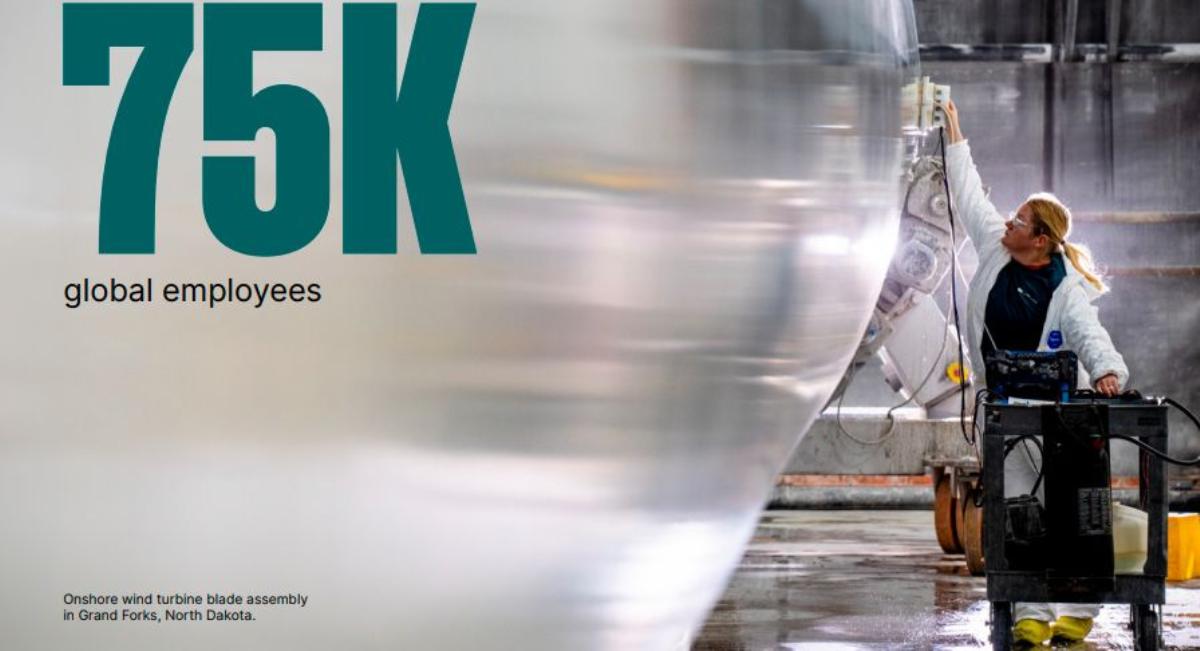
GE Vernova operates in more than 100 countries and employs approximately 75,000 people across manufacturing, engineering, and service operations. The company has expanded its production workforce to increase manufacturing output at key facilities, particularly in the United States.
These workforce investments are aimed at supporting the growing demand for energy infrastructure equipment, including turbines, grid technologies, and electrification solutions. Through investments in renewable integration, grid modernization, and advanced power technologies, GE Vernova is positioning itself as a central player in the global energy transition.
FASNA SHABEER