


Xiaomi Corporation has strengthened its position in the electric vehicle market, with its smart EV business emerging as a major growth engine in 2025. The company’s smart EV, AI and new initiatives segment generated RMB106.1 billion in revenue, reflecting a 223.8 percent year-on-year increase and marking the first time it crossed the RMB100 billion milestone. The segment also achieved a historic breakthrough by delivering full-year operating profit of RMB0.9 billion.
The EV division’s contribution continued to rise during the year, with fourth-quarter revenue reaching RMB37.2 billion, up 123.4 percent year-on-year, accounting for 31.8 percent of Xiaomi’s total revenue. This rapid expansion indicates that the EV business is approaching the scale of the company’s smartphone segment and has become its most powerful growth driver.
Xiaomi’s vehicle deliveries accelerated significantly, with total deliveries reaching 411,082 units in 2025, including 145,115 units in the fourth quarter. Building on this momentum, the company has set a target of delivering 550,000 vehicles in 2026, signaling continued aggressive expansion.
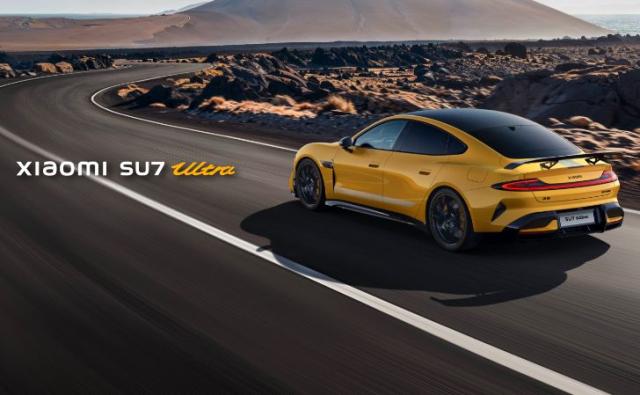
Product performance has been a key factor behind this growth. The Xiaomi SU7 series ranked first in sales among sedans priced above RMB200,000 in China, while the Xiaomi YU7 gained strong market traction, ranking number one in mid- to large-size SUV sales in the Chinese Mainland for seven consecutive months as of February 2026. The launch of the next-generation SU7 further reinforced demand, with more than 15,000 orders secured within 34 minutes and over 30,000 orders within the first three days.
Xiaomi is also expanding its innovation pipeline and brand presence in the EV space. In February 2026, the company unveiled the Xiaomi Vision Gran Turismo in Barcelona, becoming the first Chinese brand to contribute to the globally recognized Gran Turismo franchise.
To support growing demand, Xiaomi has rapidly scaled its retail and service infrastructure, operating 477 smart EV sales centers across 138 cities in China by the end of 2025. The company is also integrating AI and advanced manufacturing into its EV operations, with robotics and intelligent systems already being deployed in production environments to improve efficiency and precision.
Overall, Xiaomi’s EV business has transitioned from an emerging initiative into a core pillar of its growth strategy, driven by strong product acceptance, rapid delivery expansion, increasing revenue contribution, and continued investment in innovation and manufacturing capabilities.
FAHEEMA P